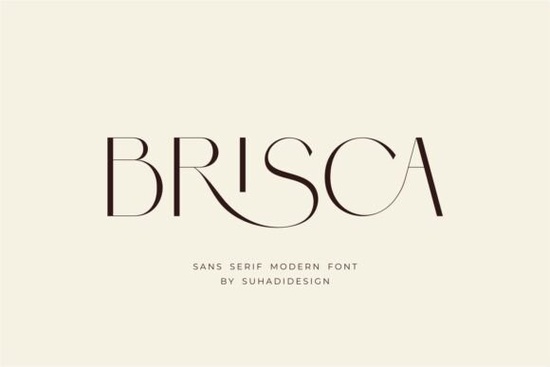
What kind of projects work best with a font like this?
Brisca Font really shines when you need a sans serif that feels soft but not flimsy. Cosmetics labels, logo redesigns, social media templates, and upscale print materials all benefit from its polished character. The ligature feature which connects certain letter pairs gracefully gives wordmarks and headlines a more custom, high-end look. That subtle detail can turn a simple brand name into something that feels thoughtfully designed.
Many crafters and small business owners pair it with product shots for skincare, handmade soaps, or candle labels. The typeface stays readable at smaller sizes, which means ingredient lists or caption text remain clear even when the design leans minimal. If you’re exploring a whole suite of clean, understated type, the minimalist sans serif selection offers similar restraint. For something with more editorial bite, you might glance at the edition-style fonts that share a structured, narrow weight but with a sharper personality. And if your brand story has a coastal or vacation-rental vibe, salty beach fonts can give a contrasting hand-drawn feel that still pairs nicely.
You can see more real‑world uses on the Brisca font showcase, where designers upload packaging mockups, website headers, and invitation suites. The project gallery often sparks ideas for how to use the same font across different mediums without it feeling repetitive.
How do the ligatures actually improve the design?
Ligatures are those little extra connections between certain letter combos like “f” and “i” or “t” and “h”. In Brisca Font, these joins aren’t overdone; they’re subtle enough to keep the text flowing naturally. The main advantage is that they break up the uniformity of standard geometric sans serifs. Instead of every letter sitting in its own perfect box, the linked pairs create a more organic rhythm. That’s especially useful when you’re working on a wordmark for a beauty brand, where every character matters.
Imagine a skincare brand called “Thermaflora.” With standard letters, it looks neat but unremarkable. Turn on the ligatures in Brisca, and the “Th” becomes a single graceful stroke, the “fl” softens into a fluid connection. Suddenly the logo feels intentional and polished. That level of detail often makes clients feel like they’re getting a custom‑lettered piece, even though it’s a standard font file.
In practice, you’ll find the ligatures active by default in most modern design software like Adobe Illustrator, Affinity Publisher, or Canva (when you upload the OTF version). If you ever need to turn them off for a more straightforward look, it’s just a checkbox away.
Can you use Brisca Font for commercial products and print‑on‑demand?
Yes, the license typically covers a broad range of commercial uses, including items sold in online shops, on physical merchandise, and in client work. Print‑on‑demand sellers will be happy to hear this: you can use the font on mugs, tote bags, t‑shirts, and phone cases without an extra extended license in many cases. Always double‑check the specific license terms listed on the product page, of course, but Creative Fabrica’s standard license is built with small creative businesses in mind.
If you’re crafting templates to sell for example, Canva templates for wedding invitations, social media kits, or e‑book covers the font can be embedded as long as the end user isn’t installing the file separately. That’s a huge time‑saver for template designers who want a signature sans serif look without chasing down separate permissions for each product listing.
What about pairing Brisca with other typefaces?
The neutral, slightly warm letterforms make Brisca a great team player. For body copy, a simple serif like a transitional or old‑style face creates a nice contrast think of the way a classic book layout pairs a sturdy sans for headings with a readable serif for paragraphs. If you want to keep everything in the sans family, choose a second font with a distinctly different weight or x‑height. A thin, all‑caps sans for subheadings against Brisca’s medium weight can build a clear visual hierarchy without adding extra type categories.
When in doubt, stick to two typefaces max for most branding projects. Use Brisca for the hero elements headline, tagline, maybe the nav bar in a web layout and let a straightforward supporting font handle the long‑form text. The goal is harmony, not competition.
What should you check before downloading?
Make sure you’re getting the OTF files (OpenType) to access the full ligature set and other OpenType features like alternates. Check the character map if you need special accented characters for multilingual designs Brisca typically includes standard Western European glyphs, and many versions extend to Central European languages. If you plan to use the font in a web project, verify that the license allows @font‑face embedding or that you can purchase a webfont version.
Also, don’t skip the preview tool on the product page. Type in your own brand name or tagline to see exactly how the ligatures connect and what the overall spacing feels like before you commit.
Quick checklist for working with Brisca Font
- Enable ligatures in your design app (usually on by default with OTF files).
- Test at multiple sizes: large for headlines, small for captions readability shouldn’t suffer.
- Pair intentionally: try a serif for body text or a thin sans for subheadings.
- Check the license if you’re using it in templates, print‑on‑demand, or merchandise.
- Preview with real copy, not just dummy text, to see how the ligatures behave.
With those steps, you’ll get the most out of Brisca’s clean, stylish character without any guesswork.
Try It Free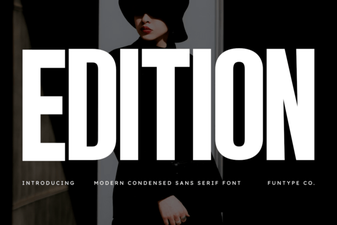 Edition Font: Versatile Typeface for Creative Projects
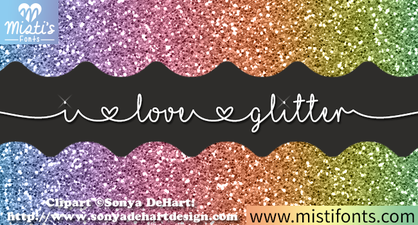 I Love Glitter Font: Add Sparkle to Your Projects
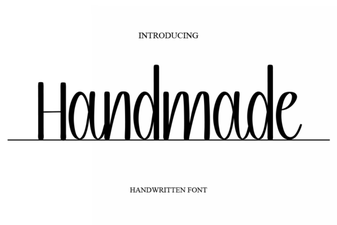 Handmade Fonts for Creative and Authentic Design Projects
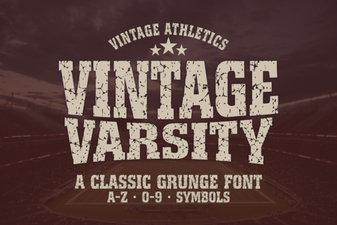 Vintage Varsity Font: Retro Style, Modern Designs
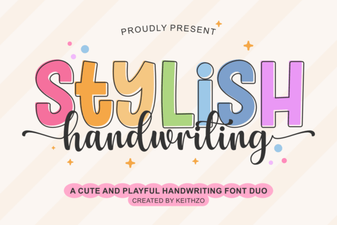 Stylish Handwriting Fonts for Creative Design Projects